77 West 55th Street
New York, New York 10019 38 W 39th St. NY NY 10018
212-581-3003
24/7 Customer Support
Mon - Fri: 24/7
Always open online
333 Hudson St – 333 Hudson, New York, NY, Class B Office Building 333 Hudson St – 333 Hudson, […]
Hudson Square, Tribeca
99 Hudson St – 99 Hudson Street, New York, NY, Class B Office Building 99 Hudson St – 99 […]
Tribeca
Walker St, City Hall, Office/Retail Space For Rent 1,500 – 2,060 SF Walker St, City Hall, Office/Retail Space For […]
City Hall, Tribeca
Tribeca , Broadway, Built Office/Medical Space For Lease 1,750 – 8,600 SF Tribeca , Broadway, Built Office/Medical Space For […]
Tribeca, Broadway
Harrison St, Tribeca, Office/Retail Space For Rent 2,650 SF Harrison St, Tribeca, Office/Retail Space For Rent 2,650 SF Suite […]
Tribeca
124-130 Hudson St, New York, NY, Tribeca, Class B Office Building For Lease 124-130 Hudson St, New York, NY, […]
Tribeca
Worth St, Tribeca, Fully Build-Out Retail/Office Space For Lease 2,300 SF Worth St, Tribeca, Fully Build-Out Retail/Office Space For […]
Tribeca
Tribeca, Commercial Office Condo Space For Sale 11,300 SF Tribeca, Commercial Office Condo Space For Sale 11,300 SF, $5,650,000 […]
Tribeca
255 Greenwich St, Tribeca, Class A Office space for lease 6,000 – 11,700 SF, Ideal for office and medical -13’ […]
Tribeca, Downtown Manhattan
Tribeca Office Space for Rent/Lease
Tribeca office space occupies one of the most distinctive office markets in Lower Manhattan. The neighborhood — whose name comes from “Triangle Below Canal Street” — combines historic loft buildings, converted industrial properties, boutique offices, luxury residential buildings, restaurants, galleries and Hudson River waterfront space.
For decades, Tribeca was better known for its cast-iron architecture, warehouses, artists and residential lofts than for conventional corporate offices. That identity has not disappeared. Instead, it has become one of the neighborhood’s biggest advantages.
Today, companies looking for creative office space, loft offices, boutique Class A properties and character-rich workplaces can find a very different environment from the glass towers of Midtown. Tribeca also sits next to Hudson Square, SoHo, the Financial District and the World Trade Center, giving tenants access to several major Lower Manhattan employment centers.
The market is particularly relevant to technology, media, creative companies, professional services, law firms, financial businesses and smaller companies that want a downtown address without sacrificing access to Manhattan’s broader business network.
Tribeca should not be treated as one uniform office submarket. The neighborhood contains everything from small historic lofts to modern Class A buildings, while the surrounding Hudson Square and World Trade Center areas add much larger office properties to the immediate search area.
That variety also explains why asking rents can vary substantially from one building to another.
Recent leasing activity illustrates the range. In early 2026, an AI company leased 10 Harrison Street in Tribeca at a reported $75/SF asking rent, demonstrating continued demand for office space even in a building that had previously been considered a potential residential-conversion candidate.
At the other end of the market, renovated Class A buildings around the Tribeca/Hudson Square border offer larger floorplates, modern infrastructure and building amenities, creating a very different rent profile.
The broader Downtown Manhattan market has also strengthened. Manhattan ended 2025 with a 13.9% overall availability rate, while Downtown leasing activity accelerated into 2026. Cushman & Wakefield reported 320,804 square feet of Downtown office leasing in January 2026, a 69.3% increase from the prior year.
Creative and technology demand. Tribeca’s loft buildings, restaurants, architecture and proximity to other downtown technology hubs make it a natural fit for companies that want something less conventional than Midtown.
Improving Downtown demand. Increased leasing activity across Downtown has reduced some of the pressure that previously encouraged landlords to consider office-to-residential conversions.
Building-specific pricing. Two offices only a few blocks apart can have very different asking rents depending on the floor, renovation level, views, amenities and lease term.
Proximity to major office districts. Tenants can access Hudson Square, SoHo, the Financial District and the World Trade Center without giving up Tribeca’s more residential and creative atmosphere.
Tribeca’s office inventory is strongly defined by loft space.
Many properties originated as warehouses, manufacturing buildings, printing facilities or other industrial structures. Their conversion into office space produced the large windows, high ceilings, exposed architectural details and open floorplates that continue to attract creative businesses.
That does not mean Tribeca is limited to small creative studios. The neighborhood also has modern and repositioned Class A properties that can accommodate larger companies.
Buildings around the Canal Street and Hudson Square edges generally provide larger floorplates and more conventional corporate infrastructure, while properties deeper in Tribeca tend to offer the character and smaller-scale floorplates associated with the neighborhood.
This creates several different tenant strategies. A startup may choose a 2,000- to 5,000-square-foot loft. A growing technology company may look for 10,000 to 30,000 square feet in a renovated building. A larger financial, professional-services or media company may need to move toward the Tribeca/Hudson Square edge to find contiguous Class A space.
The old $55–80/SF range is too broad to describe today’s market on its own. Tribeca has a significant spread between older loft inventory, renovated Class B properties, boutique Class A buildings and premium space near Hudson Square.
Recent market activity provides a useful reference point. The AI company leasing 10 Harrison Street reportedly agreed to an asking rent of $75/SF. At the upper end, buildings with major renovations, strong amenities and modern infrastructure can command substantially higher rents.
For tenants, the important question is therefore not simply “What is the Tribeca average?” but which part of Tribeca and which type of building fits the business?
Prewar and renovated loft properties in this part of Tribeca typically fall around $60–90+/SF, with spaces ranging from approximately 2,000 to 20,000 square feet. These offices can be particularly suitable for creative companies and smaller businesses.
Historic lofts and boutique offices in central Tribeca generally fall around $65–100+/SF, with typical spaces of 2,000–15,000 square feet. The area is a natural fit for creative and technology companies that value character and flexible layouts.
Loft properties and renovated Class A space in West Tribeca can range from approximately $70–110+/SF, with spaces from 3,000 to 30,000 square feet. Technology, media and professional-services companies can find suitable options here.
Modern Class A properties around the Tribeca/Hudson Square border can command approximately $80–120+/SF, with larger spaces ranging from 5,000 to 50,000+ square feet. These buildings are better suited to corporate, financial and technology users that need larger floorplates and modern infrastructure.
Highly renovated Class A and boutique trophy properties can reach $100/SF+, with typical spaces ranging from 5,000 to 30,000+ square feet. These offices appeal to tenants prioritizing building quality, amenities and workplace experience.
Sublease and furnished offices can vary widely in price, with spaces ranging from approximately 1,500 to 30,000+ square feet. They can be useful for companies seeking shorter-term commitments or immediate occupancy.
These figures are indicative market ranges rather than a single published Tribeca-wide average. Actual asking rents vary by property, floor, condition, lease term, tenant credit and concessions.
The $75/SF transaction at 10 Harrison is particularly useful as a reference because it shows that Tribeca continues to support office leasing at a time when some older downtown buildings are being evaluated for alternative uses.
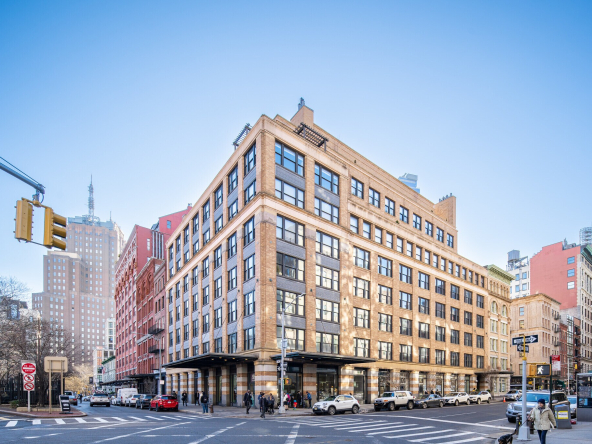
Class A space in Tribeca is concentrated toward the edges of the neighborhood rather than in a traditional Midtown-style cluster.
Properties closer to Hudson Square and Canal Street provide larger floorplates, modern infrastructure and more conventional corporate amenities.
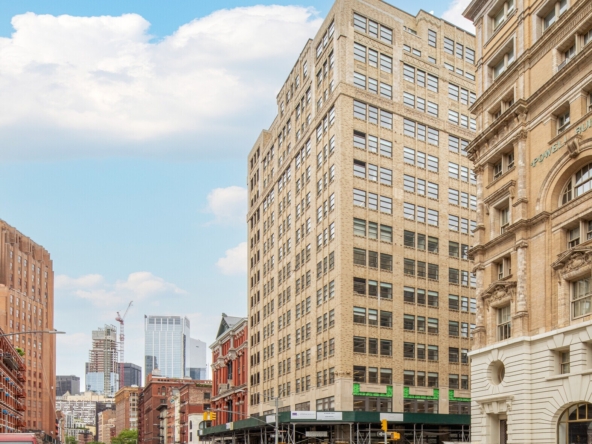
101 Greenwich Street is one of the most notable examples. The 26-story Class A office building contains roughly 476,000 square feet and underwent a major renovation. It offers flexible suites, tenant lounges, conference facilities, bike storage, upgraded elevators and 24/7 security.
Another important option just west of Tribeca is 101 Avenue of the Americas, a 425,000-square-foot Class A building positioned at the intersection of Tribeca, SoHo and Hudson Square. The property offers large floorplates, natural light, 12-foot clear ceiling heights and infrastructure aimed at financial-services, technology and creative users.
These buildings are useful for tenants who like Tribeca’s location but require the infrastructure and scale of a larger Class A office.
Historic loft buildings are what give Tribeca much of its identity.
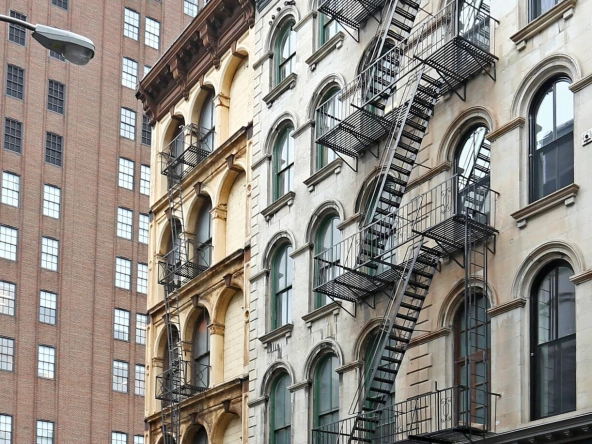
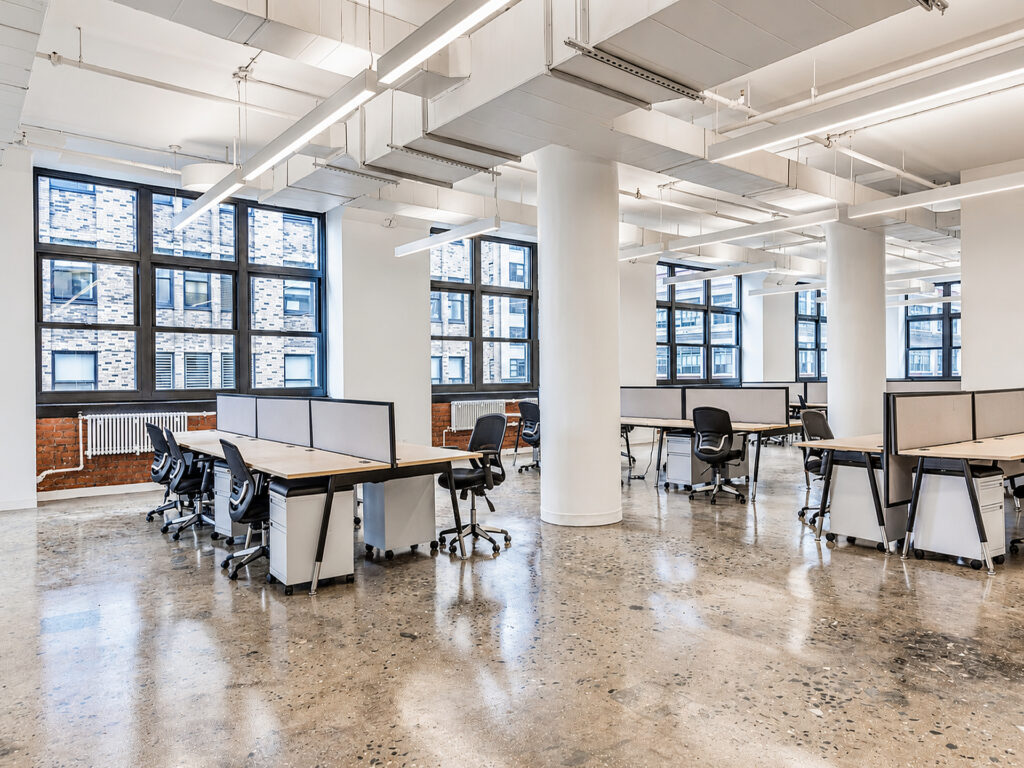
Properties throughout the neighborhood retain elements of their original industrial architecture. Instead of standardized corporate floorplates, tenants can find exposed brick, timber beams, oversized windows, high ceilings and irregular layouts.
This type of space is particularly attractive to:
A well-located Tribeca loft can therefore compete with newer Class A space even when it does not offer the same conventional amenity package.
The neighborhood itself becomes part of the workplace.
Tribeca remains one of the strongest locations in Manhattan for tenants that want a genuine loft environment.
77 Hudson Street illustrates the neighborhood’s industrial history. The building was originally constructed in 1910 as a mercantile warehouse and retains features such as arched doorways and wood beams.
The appeal is not simply architectural. Loft offices can give companies more flexibility in organizing workstations, meeting rooms, studios, collaborative areas and private offices. Large windows and high ceilings can also create a very different working environment from a conventional office tower.
For creative tenants, that distinction can be more important than a polished lobby or standardized amenity package.
Tribeca and Hudson Square are often searched together because the two office markets overlap geographically. The distinction becomes important when choosing space.
Tribeca generally offers more historic loft character, smaller buildings and a quieter neighborhood environment.
Hudson Square has a larger concentration of modern Class A office buildings and larger floorplates.
A company looking for a 3,000-square-foot creative loft may prefer Tribeca, while a company searching for 30,000 square feet of highly modern Class A space may find more options around Hudson Square.
The two areas are close enough that tenants should search both rather than treating the neighborhood boundary as a hard line.
A major renovated Class A office building with modern amenities, flexible suites and substantial floorplates. It is particularly relevant to tenants that want downtown access with a more contemporary workplace environment.
A large Class A building at the Tribeca, Hudson Square and SoHo intersection. Its size, infrastructure and modern floorplates make it suitable for financial, technology and creative users.
A loft/Class B property that attracted attention after an AI company reportedly leased the building at a $75/SF asking rent in early 2026.
77 Hudson Street
A historic loft property and former mercantile warehouse. Its original architectural character represents the type of space that differentiates Tribeca from conventional office districts.
A prewar, loft-style office option offering the character-rich environment associated with Tribeca’s older commercial buildings.
A historic loft property suited to tenants looking for a more boutique downtown office environment.
A prewar property offering smaller, character-oriented office opportunities.
A prewar/loft building with smaller creative office opportunities.
A boutique Class A building near Hudson Square, providing a more modern alternative within the broader Tribeca office search.
A large Class A property with significant infrastructure near the Canal Street area and a major office and communications presence.
A major Class A office complex in Hudson Square, close to Tribeca and particularly relevant to larger tenants seeking modern office space.
A modern Class A office building connected to the broader Hudson Square technology ecosystem and suitable for companies requiring larger, contemporary office space.
The right building depends heavily on required square footage. Smaller historic properties can work well for boutique tenants, while larger Class A buildings near the neighborhood’s perimeter are more practical for companies requiring substantial contiguous space.
Tribeca’s tenant mix is closely connected to its architecture, location and relationship with Hudson Square.
Technology companies can choose between historic lofts in central Tribeca and modern Class A space closer to Hudson Square. The creative environment and access to the broader downtown technology ecosystem are important advantages.
Media and production companies often benefit from the larger open floors and distinctive layouts available in Tribeca’s loft buildings, particularly in central and western parts of the neighborhood.
Historic Tribeca is a natural fit for creative and design firms. High ceilings, large windows and distinctive architectural details provide a workplace that feels different from a conventional office tower.
Financial companies that prioritize modern infrastructure and transit access may find better options toward the Hudson Square edge, particularly in Class A buildings.
Law firms can benefit from Tribeca’s central Lower Manhattan location and access to both traditional office buildings and more character-oriented Class B properties.
Professional-services companies can choose from Class A and Class B space around Tribeca and the Canal Street area, depending on their size and workplace requirements.
Historic lofts can work particularly well for architecture and engineering firms because their open layouts allow greater flexibility in organizing workstations, meeting areas and project space.
HealthTech and healthcare-related companies may favor the Hudson Square edge, where modern infrastructure and transportation connections are more readily available.
Smaller companies can benefit from boutique buildings and side-street locations where smaller suites and neighborhood character are more common.
Media and advertising companies can take advantage of both loft and Class A options, while restaurants, culture, retail and the surrounding creative ecosystem add value beyond the office itself.
Technology and AI are becoming particularly important to the broader Tribeca/Hudson Square office ecosystem. The recent 10 Harrison Street lease is one example, while nearby Hudson Square has attracted a much larger concentration of technology tenants.
Asking rent is only the starting point when comparing Tribeca office space.
Tenants should also evaluate:
These terms can materially change the effective cost of a lease.
The difference is especially important when comparing a historic loft with a newly renovated Class A building. A loft may require more tenant work but offer a lower face rent, while a modern prebuilt office may have a higher asking rent but require significantly less upfront construction.
A direct lease is usually better suited to a company planning a longer-term occupancy. It generally allows more customization, although build-out costs and upfront expenses can be higher. Furniture is usually separate, and flexibility depends on the negotiated lease terms.
A sublease is often more suitable for companies that need shorter-term or immediate occupancy. The space may already have an existing build-out and furniture, reducing upfront costs. Availability changes frequently, but subleases can provide greater flexibility than a conventional long-term lease.
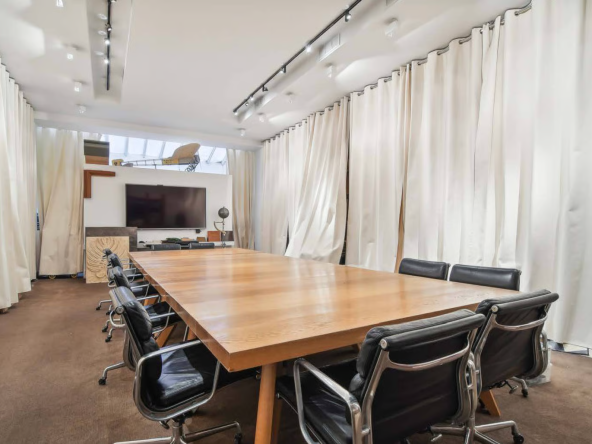
For Tribeca companies, a furnished or already built-out sublease can be particularly attractive to a small technology, media or creative business that wants to move quickly without spending heavily on construction.
Tribeca’s amenities are different from those found in a large Midtown tower.
Some modernized buildings provide tenant lounges, conference centers, rooftop or terrace areas, fitness facilities, bicycle storage, modern lobby and security systems, high-speed connectivity and prebuilt office suites. Restaurants and retail can also be available at street level.
But the neighborhood itself is arguably the larger amenity.
Employees have immediate access to restaurants, cafés, hotels, parks, galleries, retail and the Hudson River waterfront. That makes Tribeca particularly attractive to companies that want an office environment where employees can leave the building and immediately have places to eat, meet clients or spend time outside.
The Hudson River waterfront is another important part of the neighborhood’s appeal.
Hudson River Park runs along the western edge of Tribeca and provides walking, recreation and outdoor space close to office buildings.
For companies focused on employee experience, this creates a different environment from an office located several blocks inland in the Financial District.
The combination of historic buildings, restaurants, waterfront access and relatively quiet streets is one reason companies continue to consider Tribeca even when less expensive downtown office options are available elsewhere.
Tribeca has strong subway access from several directions. Depending on the exact part of the neighborhood, tenants can access the 1, 2, 3, A, C, E and R/W subway services.
The 1, 2 and 3 trains provide north-south access along the west side of Manhattan and connections toward Upper Manhattan.
The A, C and E provide additional connections through Lower Manhattan, Midtown and the West Side.
The R and W services provide access toward Midtown, Downtown and Brooklyn, particularly around the eastern side of Tribeca and City Hall.
The PATH connection at the World Trade Center is particularly useful for New Jersey commuters, while nearby ferry services provide additional waterfront connections.
Multiple subway stations are within walking distance depending on the building, making the exact office address important when evaluating employee commutes.
The neighborhood’s proximity to the World Trade Center also gives tenants access to one of Lower Manhattan’s largest transportation hubs.
Tribeca and the Financial District are close enough that companies often compare them directly.
The Financial District offers a much larger concentration of high-rise Class A office buildings and large floorplates.
Tribeca offers more historic architecture, loft inventory, smaller buildings and a neighborhood environment that feels less corporate.
For a company that needs 100,000 square feet, the Financial District may provide a deeper inventory of suitable buildings. For a company looking for 5,000 to 15,000 square feet with character, Tribeca can offer a very different set of choices.
SoHo is another natural comparison.
Both neighborhoods have historic loft architecture and creative tenants, but Tribeca is generally quieter and more residential.
SoHo has a stronger retail identity and heavier pedestrian traffic, while Tribeca has more residential streets, waterfront access and a broader mix of boutique office properties.
Companies choosing between the two should consider not only asking rent but also employee commute, floorplate, building condition, street environment and client access.
The case for Tribeca office space is not based on one statistic. It comes from the combination of several factors.
Location. Tribeca sits between major Lower Manhattan employment centers, including Hudson Square, the Financial District and the World Trade Center.
Architecture. Historic loft buildings provide something that standardized office towers cannot easily reproduce.
Technology ecosystem. AI and technology companies continue to appear in the neighborhood and surrounding Hudson Square market.
Amenities. Restaurants, cafés, retail, parks and the Hudson River are all part of the immediate environment.
Transit. Multiple subway services and proximity to the World Trade Center make the neighborhood accessible from different parts of the region.
Flexibility. The market includes everything from small loft offices to large Class A buildings, allowing companies to choose space according to size, budget and workplace requirements.
There is no single Tribeca asking rent. Recent evidence includes a reported $75/SF asking rent at 10 Harrison Street, while premium Class A and highly renovated properties can command substantially more. Indicative ranges vary depending on location, building type, condition and lease terms.
Yes. Technology and AI companies are part of the neighborhood’s evolving tenant base, while the adjacent Hudson Square market has become one of Lower Manhattan’s major technology office clusters. Recent leasing at 10 Harrison Street is one example of continued technology demand.
A significant portion of the neighborhood’s distinctive office inventory consists of converted industrial and prewar buildings. However, tenants can also find modern Class A properties, particularly toward Hudson Square and the Canal Street edge.
Important properties include 101 Greenwich Street, 101 Avenue of the Americas, 10 Harrison Street, 77 Hudson Street, 99 Hudson Street, 40 Worth Street, 401 Broadway and 285 West Broadway. Larger tenants should also consider nearby Hudson Square properties such as 345 Hudson Street and 555 Greenwich Street.
Tribeca can provide lower-cost alternatives to the most expensive Midtown trophy corridors, but premium downtown Class A buildings can still command high asking rents. The comparison should therefore be made building by building rather than using a single neighborhood average.
The neighborhood’s historic lofts and boutique buildings can be particularly suitable for small and mid-sized businesses looking for character, central access and smaller floorplates.
Yes. 101 Greenwich Street and 101 Avenue of the Americas are examples of modern or extensively renovated Class A office options around the Tribeca/Hudson Square edge.
Tribeca is served by multiple subway lines and is close to the World Trade Center transportation network. Exact access depends on the building, but the neighborhood generally provides strong connections to Midtown, the West Side, Brooklyn, New Jersey and other parts of Lower Manhattan.
Tribeca is not a conventional office district.
Its strongest selling point is the combination of historic architecture, creative loft space, modern Class A buildings, downtown connectivity and a neighborhood environment that extends beyond the office itself.
The market is also becoming more relevant to technology and AI companies, while broader Downtown leasing conditions have improved. That makes Tribeca worth considering not simply as a lifestyle alternative to Midtown, but as a distinct office market with its own tenant base and building types.
For companies searching for Tribeca office space for rent or lease, the most useful comparison is not one neighborhood-wide average. The right choice depends on the building, floorplate, asking rent, concessions, transit access, existing build-out and the type of workplace the company wants to create.
For a creative company, a historic loft may be the priority. For a growing technology or financial firm, modern Class A space near Hudson Square may make more sense. For a smaller business, a boutique office or furnished sublease can provide the location without the commitment of a large direct lease.
Tribeca gives tenants all of those options within a relatively compact part of Lower Manhattan.
Related Articles

Compare listings
Compare