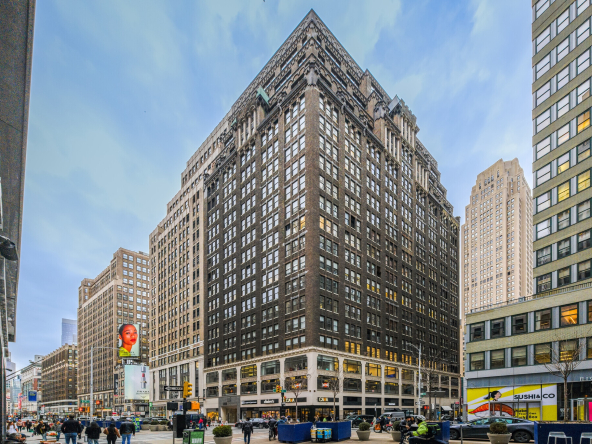
77 West 55th Street
New York, New York 10019 38 W 39th St. NY NY 10018
212-581-3003
24/7 Customer Support
Mon - Fri: 24/7
Always open online
Times Square, Broadway, Office Condo Space For Sale 16,800 – 16,900 SF Times Square, Broadway, Office Condo Space For […]
Time Square, Broadway
1270 Broadway – Cambridge Building, New York, NY Class B Office Building 1270 Broadway, Class B Office Building, 10001 […]
Herald Square, Broadway, Midtown Manhattan
873 Broadway, New York, NY, Class B Office Building 873 Broadway, New York, NY, 10003 Cross Streets are: E […]
Union Square, Broadway
826 Broadway, New York, NY, Class B Office Building 826 Broadway, New York, NY, 10003 Cross Streets are: E […]
Greenwich Village, Broadway
1412 Broadway, New York, NY, Class B Office Building 1412 Broadway, New York, NY, 10018 Cross Streets are: W […]
Garment District, Broadway
305 Broadway, New York, NY, Class B Office Building 305 Broadway, New York, NY, 10007 Cross Streets are: Thomas […]
City Hall, Broadway
217 Broadway – The Astor Building, New York, NY Class B Office Building 217 Broadway, Class B Office Building, […]
City Hall, Broadway
Penn Station, Broadway, Office Space For Lease 6,100 – 7,500 SF Penn Station, Broadway, Office Space For Lease 6,100 […]
Penn Station, Broadway
Broadway, Garment District, Fully Built & Furnished Office Space For Rent 12,350 SF Broadway, Garment District, Fully Built & […]
Garment District, Broadway, Broadway
6 Challenges Tenants Face in Finding a Suitable NYC Office Space
6 Challenges Tenants Face in Finding a Suitable NYC Office Space. New York City is one of the most dynamic office markets in the world. From the skyscrapers of Midtown to the creative lofts of SoHo and the emerging business corridors in Brooklyn, the city offers an incredible variety of office space. But with opportunity comes complexity. For tenants, the search for a suitable office in NYC often becomes a time-consuming and challenging process.
While every business has its unique needs, there are several common challenges that almost all tenants face when looking for space in the city that never sleeps. Understanding these hurdles can help companies prepare, negotiate more effectively, and ultimately secure a workspace that truly supports their goals.
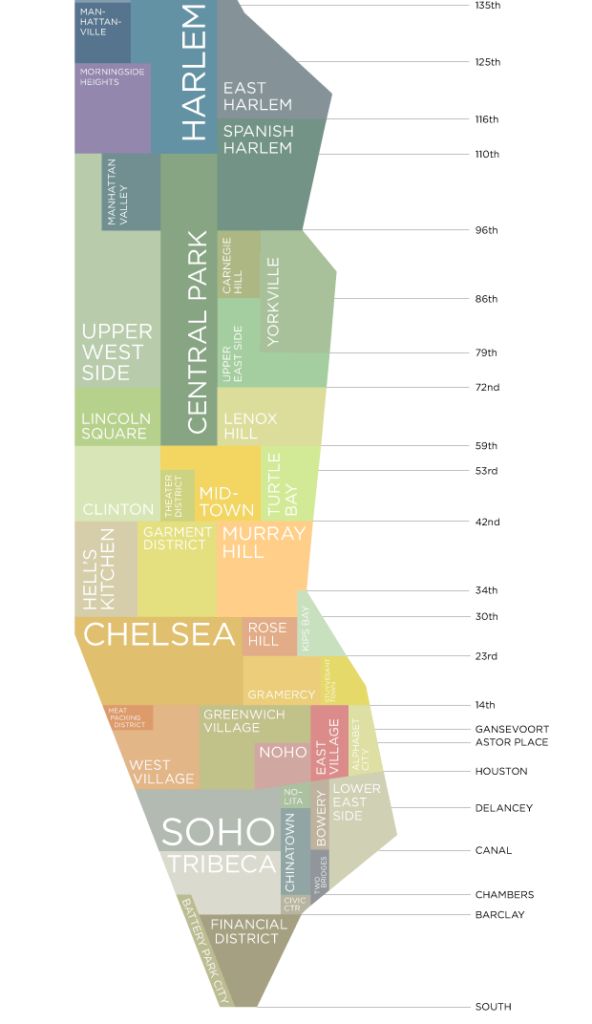
For most tenants, the first and biggest challenge is finding the right location at the right price. New York is a city of neighborhoods, and each one offers something different: Midtown for prestige, Downtown for financial institutions, Chelsea for creative energy, and Brooklyn for cost-effective flexibility.
The challenge arises because prime addresses often come with premium rents. A company may want to be near Grand Central Terminal or in Hudson Yards for convenience and brand presence, but rents in those areas can stretch even healthy budgets. On the flip side, more affordable spaces might be located in areas that lack the transit access or prestige needed to attract clients and employees.
The key difficulty for tenants is balancing budgetary discipline with strategic location choices. In many cases, compromises are necessary—either by adjusting expectations about size, considering emerging neighborhoods, or opting for Class B instead of Class A buildings.
Another hurdle is navigating the differences between Class A, Class B, and Class C buildings.
For many businesses, the decision is not just about rent but also about amenities and services. Today’s tenants often want more than four walls and an office door. They may require conference centers, wellness rooms, bike storage, upgraded HVAC systems, or flexible common areas.
The challenge is aligning these features with both budget and long-term company culture. Choosing the wrong class or overlooking key amenities can impact employee satisfaction, productivity, and brand image.
Lease terms in NYC are rarely simple. Tenants often face the dilemma of choosing between short-term flexibility and long-term stability.
This becomes especially challenging for fast-growing companies or businesses in transition. A tech startup may double in size within two years, making today’s perfect office obsolete tomorrow. On the other hand, a law firm or financial services firm may prefer stability but risks overcommitting if the market softens.
Tenants also face complexity with rent escalations, renewal options, subleasing rights, and build-out responsibilities. Without careful negotiation, a lease can quickly become a burden instead of a benefit.
Even in times of higher vacancy rates, the NYC office market is extremely competitive. Prime spaces in Midtown or near major transit hubs can lease quickly, leaving tenants with limited options if they hesitate.
Smaller tenants face the added challenge of competing against larger corporations that can take entire floors or buildings. Landlords may prioritize these bigger deals, offering them better incentives and more attention during negotiations.
Additionally, not all available spaces are marketed equally. Some of the best opportunities are never listed publicly and are instead leased through broker relationships or direct landlord connections. For tenants without access to these networks, finding a hidden gem can be nearly impossible.
The challenge, then, is acting quickly while still making informed decisions—a difficult balance in such a fast-moving market.
Even after finding the right space, tenants often face another major challenge: making the office functional for their needs. Most office spaces are delivered either as “white box” shells or as second-generation spaces previously used by another tenant. Rarely will a space perfectly match a company’s requirements without modification.
Customizing an office—whether by adding private offices, open work areas, meeting rooms, or specialty spaces—can be expensive and time-consuming. While landlords may provide tenant improvement allowances, these often do not cover the full cost of construction.
On top of this, there are hidden costs:
These expenses can add tens or even hundreds of thousands of dollars to the total cost of moving, surprising tenants who only budgeted for rent.
Finally, one of the biggest challenges tenants face is the complexity of the process itself. Unlike residential rentals, commercial leasing in NYC involves a series of intricate steps:
Without expert guidance, tenants risk overlooking key details, accepting unfavorable terms, or committing to spaces that don’t align with long-term goals.
This is why many companies choose to work with experienced commercial real estate brokers and attorneys. Professionals not only streamline the process but also provide critical insights into market conditions, landlord reputations, and negotiation strategies.
Finding the right office space in New York City is a major undertaking. Between balancing location and budget, navigating building classes, securing favorable lease terms, competing for prime availability, managing build-out costs, and handling complex negotiations, tenants face an array of challenges that go far beyond choosing a floorplan.
Yet, these challenges are not insurmountable. With careful planning, realistic expectations, and the right professional support, companies can secure a space that aligns with their financial goals, brand identity, and long-term growth.
New York City will always be a competitive and complex market, but it also offers unmatched opportunities. By understanding and preparing for these six common challenges, tenants can move forward with confidence—knowing that the right office is not just possible, but attainable.
Related Articles


Compare listings
Compare